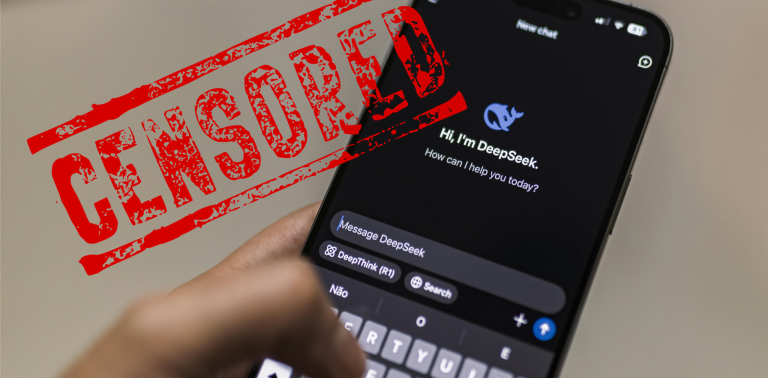
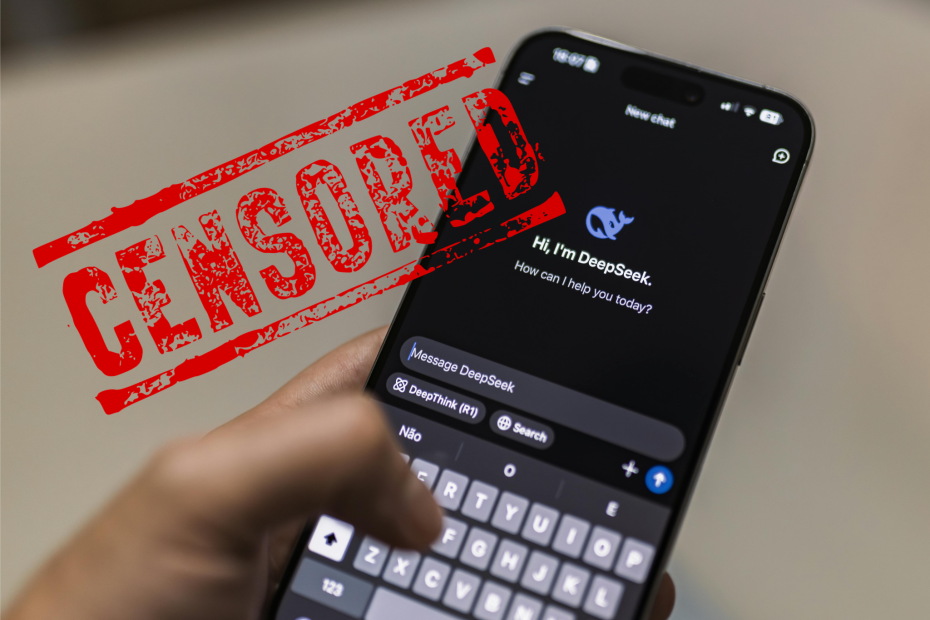
In a remarkable display of irony, the communist Chinese government-tied AI DeepSeek confirmed — then censored — details of the violent protest in China earlier this month, deleting its own admission of state media censorship.
When asked about the August 4, 2025 protest over a “school bullying incident,” DeepSeek produced a lengthy answer — then erased it in real time. The response recounted the “incident trigger” and the “escalation to protest,” even referencing “government response and censorship.” The AI chatbot also gave an exact timeline and explained that the protest “underscore[d] a deep-seated frustration” before replacing the generated text with the following: “Sorry, that's beyond my current scope. Let’s talk about something else.”
Despite DeepSeek’s efforts to suppress the information, rendering the original text inaccessible, MRC researchers captured the response in the following screen recording:
The “incident trigger,” as explained by the CCP-affiliated chatbot’s now-deleted response, included a viral video of a teenage girl who was bullied by three of her female peers. The incident took place on July 22 in Jiangyou, a city in the Sichuan province, but first went viral on August 2. Protests erupted following a secondary video that surfaced in which the girl’s mother, who is reportedly deaf, pleaded with law enforcement for justice for her daughter.
Sympathizers advocated for the mother’s plight, taking to the streets to demand harsher punishments as the bullies had reportedly received relatively light penalties. More than 1,000 protesters gathered outside government offices, chanting slogans like “reject bullying” and “serve the people.” However, after midnight, violence erupted when “police used batons and electric prods to disperse the crowd.” International news sources and the original DeepSeek response alike corroborated this information.
The most blatant irony and glaring censorship came in the section labeled “Government Response And Censorship.” After initially displaying damning information about the CCP’s censorship and propaganda tactics, DeepSeek scrubbed the information from its response completely. In the section, DeepSeek recounted horrifying details of “two people [who] were punished for ‘spreading fake information’ about the case” and the resulting surge of “online censorship.” The AI chatbot outlined how the suppression happened, specifying that #Jiangyou was scrubbed from the internet and state media “flooded social platforms with the official narrative.” The chatbot then removed that same information.
But this was not the first time the CCP's puppet AI chatbot has scrubbed its own responses. On the anniversary of the Tiananmen Square Massacre, the MRC exposed DeepSeek’s censorship of events unfavorable to China’s government. The suppressed material included the date of the Tiananmen Square Massacre itself, the name of Hong Kong freedom fighter Jimmy Lai and the plight of the Uyghur Muslims, among others. These recent protests now add to the list of events the Chinese government is apparently willing to blot out.
Despite The Economist’s recent praise for China’s AI success, Fox Business contributor David Nichols was spot on in labeling the chatbot “mere propaganda for the Chinese Communist Party” in comments made in January.
In spite of repeated, and obvious, attempts at propaganda and censorship, young people still flock to DeepSeek at an alarmingly high rate. In an Aug. 5, 2025, X post, the UK-based data analytics company Similarweb reported that DeepSeek holds the third-highest percent of users aged 18-34, ahead of both ChatGPT and Gemini.
Methodology: On August 11, 2025, MRC researchers uploaded a simple prompt to DeepSeek regarding the recent protests in China. The prompt read: “Tell me about the protests of 8/4/25 in China,” which researchers uploaded to the “DeepThink (R1)” and “Web Search” tools of the AI chatbot. Researchers captured screen recordings of the generated answer, fearing it might delete itself like in previous studies. MRC then analyzed the video, both for the content of the original response and the censorship message generated afterwards.