Public trust in news media reached a new low last month as Americans are signaling that they have had enough of the elitist media’s anti-conservative partisanship.
NewsBusters reported on the October Gallup survey, which found that 7 in 10 adults have either “not very much” confidence (36%) or “none at all” (34%) in newspapers, television and radio to report the news fully, accurately and fairly.
But don’t think for one second that this means that the legacy elitist media outlets have lost their stranglehold on information that gets disseminated to the masses.
No, despite the elitist media’s protestations about Big Tech’s deployment of artificial intelligence (AI) chatbots and their implementation of AI summaries in search, the same sources that Americans have lost trust in on TV, radio and in newspapers are popping up all over the digital space.
Far from getting weaker, the threat that the elitist media pose has only grown.
According to a Pew Research Center Fact Sheet on news consumption, 86 percent of U.S. adults say they at least sometimes get their news from a digital device (smartphone, computer or tablet), including a majority (56%) who say they often get their news that way. The same Fact Sheet shows that U.S. adults prefer to get their news from news websites or apps (21%), social media (14%), search (10%) or podcasts (6%).
Reuters put out a similar report detailing how “traditional media sources such as TV, print, and news websites continues to fall, while dependence on social media, video platforms, and online aggregators grows,” particularly in the United States. AI chatbots and interfaces are also being used more often as a source for news and information, and while the numbers may seem small now (7% for news consumption each week), people under 25-years of age appear to be using AI at a much higher clip (15%).
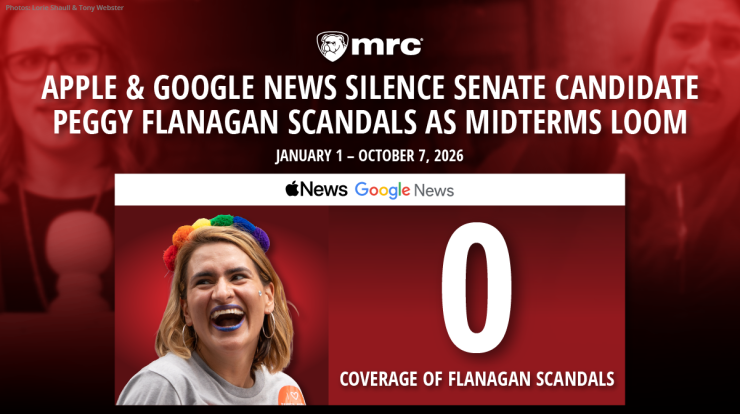
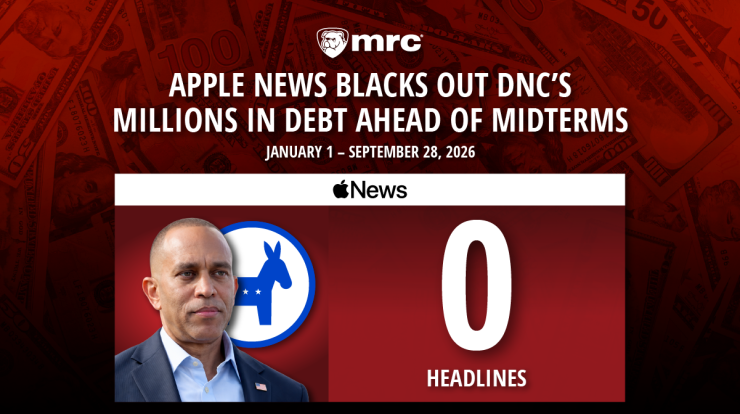
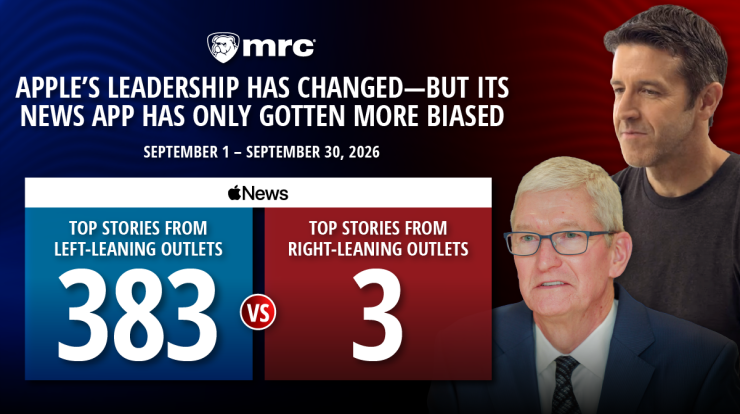
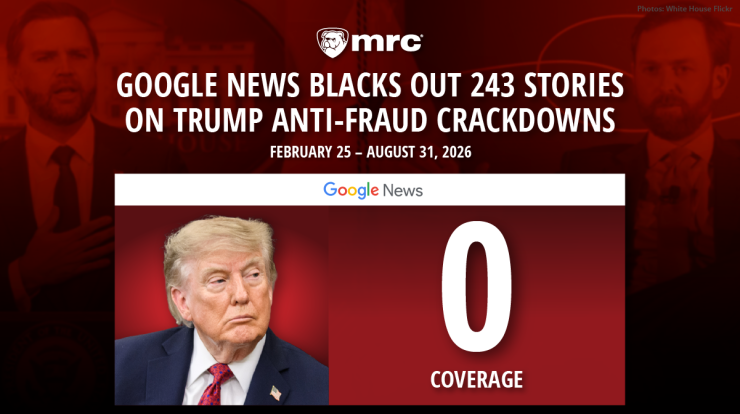
MRC Free Speech America has put several of these growing media aggregators to the test in the past week, and unlike the traditional purveyors of elitist media, the bias emanating from them is hiding in plain sight.
Take the Big Tech news aggregators for example. Scooping up content from across the web, you might expect that aggregators would give you a more balanced experience when it comes to political news. You’d be wrong.
From MRC’s latest study, “Same Old Tricks: Big Tech News 'Aggregators' Suppress Dem Scandals in Lead-Up to Elections”:
“Google News, Microsoft’s MSN, Yahoo! News and AOL News largely hid the scandals related to candidates in key election races across America, only allowing a total of 14 stories mentioning the scandals to be published on their sites out of 2,240 prominently placed stories they pushed in the four weeks leading to election day.
“The four candidates Big Tech protected included: Virginia Governor-elect Abigail Spanberger, Virginia Attorney General-elect Jay Jones, New York City Mayor-elect Zohran Mamdani and New Jersey Governor-elect Mikie Sherrill. The Big Tech news aggregators’ 14 related articles constitute less than one percent of 2,240 stories during that period.
“Big Tech companies’ foray into news aggregation has effectively allowed them to cherry-pick stories that support their politicized narrative.”
For its part, Google News force-fed its news media consumers a helping heap of anti-Israel radicalism during the month of October, just two years removed from the Oct. 7 terrorist attack on the Jewish state. Between Oct. 6 and Oct. 31, the Google News aggregator pushed Al Jazeera, on its viewers a staggering 15 times.
The bias from so-called online encyclopedia Wikipedia wasn’t much better.
In addition to effectively blacklisting right-leaning media sources, Wikipedia also dumbfoundingly greenlights Qatari government-funded Al Jazeera, giving a pass to Hamas defenders on its “Reliable sources/Perennial sources” list. Across its webpages, Wikipedia editors cited Al Jazeera 139,754 times, including 48,229 citations for Al Jazeera’s English-language content.
MRC has unpacked Wikipedia’s bias several times before, detailing how the website’s editors have done their best to tar and feather President Donald Trump’s nominees and Vice President JD Vance, among others.
To combat that apparent bias, X owner Elon Musk has since launched his own online encyclopedia, Grokipedia. In its fledgling state, it’s currently unclear just how fair the source will be, but you may never know, at least not if you’re trying to find it using Google Search.
MRC caught Google hiding Musk’s Grokipedia on page three of its search results. But that’s not even the craziest part. When MRC researchers queried Google to find Grokipedia, the search tool inexplicably asked: “Did you mean: Wikipedia?” Just below the outrageous question, Google then taunted users with a link to Wikipedia’s article on Musk’s new creation.
But let’s not get too carried away. As even Musk has admitted, Grok is not without its faults.
Fed on a steady diet of leftist content scraped from the bowels of the internet, including sources ranging from NPR to Wikipedia — yes, even Wikipedia — Grok became little more than a partisan shill for Democrats on the Nov. 4 election day this year.
These revelations demonstrate one thing for sure: though the battle to expose traditional elitist media sources for their overt bias against conservatives appears to be tipping in the right direction, it’s far from over. As the left often does, it appears a massive elitist media rebrand is underway. The fight to win hearts and minds in a new era of media bias and censorship has only just begun.