With the recent bank failures on our minds and fiscal uncertainty looming over the United States, it is crucial to revisit how far these financial institutions have strayed from their core financial obligations. Silicon Valley Bank, the first domino to fall, didn’t have a chief risk officer for months but still managed to fill its team with multiple “diversity, equity, and inclusion” officers. And with the instantaneous and legally dubious bailout of Silicon Valley Bank’s depositors, banks are now encouraged to continue their reckless, diversity-soaked practices that fly in the face of a free and fair market.
The Home Depot co-founder Bernard Marcus had the following to say about SVB’s woke ways: “These banks are badly run because everybody is focused on diversity and all of the woke issues and not concentrating on the one thing they should, which is shareholder returns. Instead of protecting their shareholders and their employees, they’re more concerned about social policies.”
And as banks continue to play the woke game, it is crucial to consider the pitfalls of the left’s latest policy push — this time from the corporate world and government working in tandem — to implement Environmental, Social and Governance (ESG) and Diversity, Equity and Inclusion (DEI) standards.
For one thing, Shark Tank’s Kevin O’Leary warned just last week: “Going forward, I think a lot of bank managers are going to say, ‘Wait a second, I have no risk. I'm going to go crazy like those guys did at the Silicon Valley Bank and do stupid leverage things. Because if anything goes wrong, as long as I stay within the baseball rules of banking, nothing can happen to me because the Fed covers all my depositors. I don't have to worry if I'm crazy.’ That's the problem we've got.”
And O’Leary is absolutely right. It’s called "moral hazard." O’Leary’s solution: “Let it fail.”
With far too many banks obsessed with ESG and DEI, and all with the government’s blessing, is it too much of a stretch to imagine the speed with which a communist Chinese government-style Central Bank Digital Currency (CBDC) coupled with a “social credit system” could emerge?
Could This Happen in America?
There are several in the media world that have said the U.S. is not far from such an authoritarian system: Fox News Host Tucker Carlson, BlazeMedia Founder Glenn Beck, and others.
Carlson explained: “[W]e’re about to see bank consolidation — big banks eating little banks — and that means less competition. More consolidation means more government control. So, what are they going to do with that control? Well, all things being equal, if people don’t start making a lot of noise and exerting an awful lot of pressure, it will mean digital currency, a currency that politicians control. Sign up for the DBDC app to get your food stamps. You think that’s not coming? Of course it’s coming.”
Beck’s take was similar. He tweeted that @ConceptualJames “is 100% on target … Soon we will have 4 banks, then the fed and CBDC. How do people not see what is happening? Oh, energy problems? Blackouts? Nationalize.” @ConceptualJames had tweeted: “Leftists will use the Silicon Valley Bank & Signature Bank collapse to push for the de facto nationalization of the banking industry under ESG. The larger banks will buy out the assets of the smaller ones. They will start by claiming the banking industry needs more regulation to promote ‘sustainability’ and ‘stakeholder’ AKA Neo-Communist control. Just watch.”
A Central Bank Digital Currency Already in the Hopper
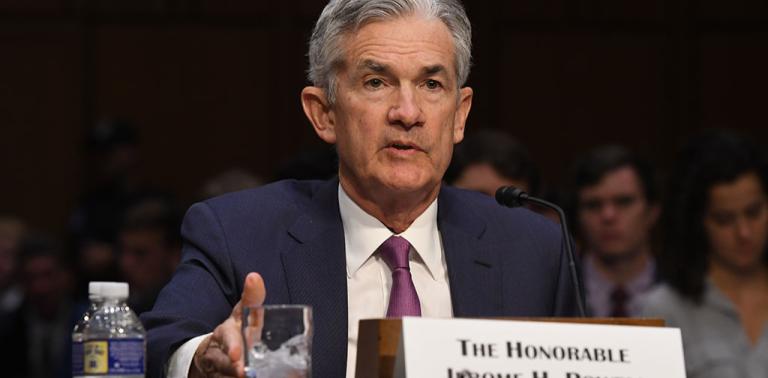
Already, back in June 2022, Federal Reserve chairman Jerome Powell let the cat out of the bag: A dystopian digital currency system was already being examined. “Rapid changes are taking place in the global monetary system that may affect the international role of the dollar in the future,” Powell said in welcoming remarks before the Inaugural Conference on the International Roles of the U.S. Dollar. “Most major economies already have, or are in the process of developing, instant 24-7 payments. Our own ‘FedNow’ service will be coming online in [July] 2023. And in light of the tremendous growth in crypto assets and stable coins, we are examining whether a U.S. central bank digital currency would improve upon what is an already safe and efficient domestic payment system. As our white paper on this topic notes, a U.S. CBDC could also potentially help maintain the dollar’s international standing.”
And that’s not all, pursuant to President Joe Biden’s Executive Order 14067 of March 9, 2022, “Ensuring Responsible Development of Digital Assets,” Secretary of the Treasury Janet L. Yellen briefly addressed the future of money and payment systems, consumer and investor protection and illicit finance risks:
“Innovation is one of the hallmarks of a vibrant financial system and economy. But as we have learned painfully from the past, innovation without appropriately addressing the impact of these developments can result in significant disruptions and harm to the financial system and individuals, especially our more vulnerable populations. The reports clearly identify the real challenges and risks of digital assets used for financial services. At the same time, if these risks are mitigated, digital assets and other emerging technologies could offer significant opportunities. These reports and their recommendations provide a strong foundation for policymakers as we work to realize the potential benefits of digital assets and to mitigate and minimize the risks.”
And here’s the kicker, a report on “The Future of Money and Payments” cited by Yellen recommends the following as an update to the U.S. banking system: (1) “Advance work on a possible U.S. CBDC, in case one is determined to be in the national interest;” (2) “Encourage use of instant payment systems to support a more competitive, efficient, and inclusive U.S. payment landscape;” (3) “Establish a federal framework for payments regulation to protect users and the financial system, while supporting responsible innovations in payments” and (4) “Prioritize efforts to improve cross-border payments, both to enhance payment system efficiency and protect national security.”
While the idea of a cashless society might sound appealing, recall from a previous newsletter email, the potential implications of a digital currency are not. PayPal in October 2022 provided a stark reminder of the power payment processors and financial institutions can have over Americans. It also demonstrated why a digital future may be even more dystopian than we can imagine.
PayPal, the popular payment processor, was caught updating its terms of service with a new policy that threatened to fine users up to $2,500 if they spread so-called “misinformation.” The update chillingly read:
"You may not use the PayPal service for activities that … involve the sending, posting, or publication of any messages, content, or materials that, in PayPal’s sole discretion … promote misinformation.”
Luckily, the outrage was swift, as #CancelPayPal trended and individuals called for users to remove their accounts and move their money away from the woke corporation.
The former President of PayPal David Marcus said the update to the Acceptable Use Policy "goes against everything I believe in."
"It’s hard for me to openly criticize a company I used to love and gave so much to,” he tweeted. “But @PayPal’s new AUP goes against everything I believe in. A private company now gets to decide to take your money if you say something they disagree with. Insanity."
Twitter owner and PayPal co-founder Elon Musk’s tweeted reply to Marcus was short: “Agreed.”
Indeed, the rise of CBDC could be quite dangerous for a number of reasons. Undoubtedly, it would disrupt the current financial system, potentially destabilizing banks and other financial institutions. Digital currencies due to their very nature are also susceptible to cyber attacks, and security breaches could mean significant losses for the holder of the digital currency and whatever institution(s) remain to organize and otherwise maintain such a system. And let’s not forget the dangers a CBDC poses to those who value privacy, transparency and freedom in banking. Using a digital currency would likely lead to increased monitoring and surveillance of financial transactions. If the federal government controls the ones and zeros of a digital currency, it could easily stop you from spending money in ways the government deems unfit.
A Social Credit Score in America?
A social credit score in America would likely not be too far removed from the system in place in communist China. Individuals would be assigned a score based on their behavior and social standing. This score could be determined by race, gender, financial responsibility, criminal history, social media activity, political affiliation, speech or perhaps even, say, ESG and DEI.
If America succumbs to the use of a social credit system, like China, the government could assign loan rates and access to banking services based on an individual's social credit score. For example, individuals with high scores might be given lower interest rates and more favorable terms, while those with low scores could face higher rates and more stringent requirements for accessing banking service—or worse, have their accounts frozen and/or cut off completely.
As we have seen with shocking revelation after shocking revelation through the release of The Twitter Files and ongoing legal battles by attorneys general battling the Biden regime, transparency as it concerns government’s relationship with all things digital (Big Tech) has not been a strength of the modern American system.
But as Carlson said, none of this happens if Americans take a strong stand now. So spread the word, and take a stand. The warning sirens are already sounding.