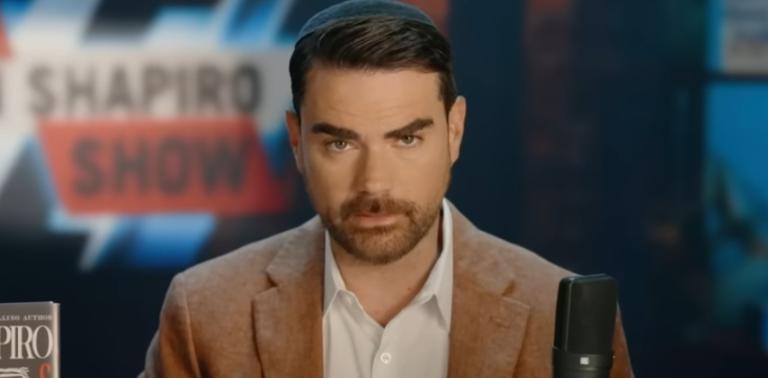
America is in an “existential race” with communist China to develop artificial super intelligence, and China is determined to use any tools it can against competitors, according to experts on a recent episode of the All-In Podcast.
The Daily Wire show host Ben Shapiro, Atreides Management CIO Gavin Baker and investor Phil Deutch joined entrepreneurs and co-hosts Jason Calacanis and David Friedberg on the August 9 edition of the All-In Podcast. During the show, the five men discussed how China certainly perceives the AI race as “existential” and how the U.S. needs to be alert and competent.
Shapiro particularly highlighted how communist Chinese government-tied TikTok was a sort of Trojan horse attacking Americans’ privacy and manipulating their information online, while Chinese AI like DeepSeek could be exponentially worse even than TikTok.
Calacanis opened up the conversation on China with the question: Is beating China in the AI race “existential for America?”
Shapiro said he definitely falls into the “existential race” camp. He used TikTok as an example of a “psyop weapon” China has used to invade Americans’ privacy and spread propaganda. “Think about how they would do that with control of the tools that everybody uses in all of their businesses, and that’s putting aside the military connotations,” Shapiro said. He added that Former Rep. Mike Gallagher (R-WI), who now works with Palantir, told him that “China's capacity, if they win the AI race, militarily, is going to explode.”
Ben Shapiro: the AI race with China is ‘existential’ pic.twitter.com/KhsoXFurrz
— Catherine Salgado (@CatSalgado32) August 14, 2025
Calacanis also warned that China will try to popularize its AI brands in the U.S. so that it can seemingly “beat us on capitalism” and win the AI race. As it has apparently done withTikTok it will try to do with DeepSeek—using socialist state-sponsored corporatism to subsidize the technology to undercut American competitors.
Friedberg later noted that while China might not “win” the AI race in terms of basic public models, it could very well win the race by integrating AI into drones and other military technology.
There are many different industries that will be impacted by the AI revolution, with “many vectors of competition.” Friedberg suggested the Chinese Communist Party’s (CCP) heavy-handed regulation of the market is perhaps driving a short-term advantage.
Deutch put in his opinion, noting that the CCP, while appearing to have more success in the short-term, is actually setting itself up for long-term failure in AI by being too dependent on state corporatism. Baker endorsed Deutch’s comments and suggested that China could end up shooting itself in the foot. A few years ago, when China “did create, kind of, the only …internet companies that were capable of challenging [US] internet companies,” the CEOs who dared to challenge the CCP at all found themselves kicked out by the government.
Just as in China, American government action could affect the AI race’s ultimate results. Tariffs could affect the AI race, Calacanis and Shapiro agreed. Shapiro noted that China sees the AI race as “adversarial,” and warned that America’s risk could be having only a very few companies control the AI development. “I think, one of the things that … is frightening to people like me about AI is because you are seeing such consolidation of AI,” he said.
This could indeed be a serious threat considering that Google, Meta, Microsoft and OpenAI appear to have developed AI with a distinct anti-free speech and leftist bias. For example, just before Independence Day, Gemini claimed that the patriotic holiday and the Pledge of Allegiance could be “offensive” to some people. In February, Gemini and MetaAI defended CBS News anchor Margaret Brennan’s outrageous claim that free speech caused the Holocaust.
And in May, both before and after the papal conclave, MRC found MetaAI, Gemini, Co-Pilot, ChatGPT, Grok and Chinese DeepSeek all displaying woke bias in analyzing papal candidates and the newly elected pope, Leo XIV.