In a post on X, Sacks, the co-chair of the White House’s Council of Advisors on Science and Technology, praised Pope Leo XIV’s focus on human dignity before pushing back on the idea of increased government control of AI. Sacks wrote, “[I]f we hand governments sweeping power over AI development in the name of safety, how do we prevent it from being used to censor, surveil, and control citizens — as Orwell foretold in 1984?” Sacks referred to this as “the real alignment problem,” arguing that granting government broad AI oversight powers is ripe for abuse.
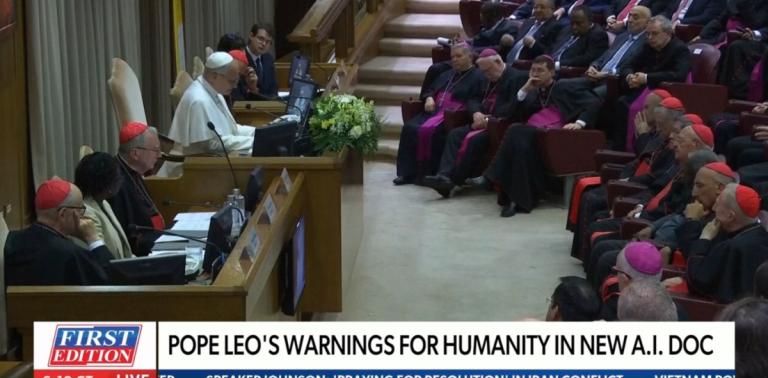
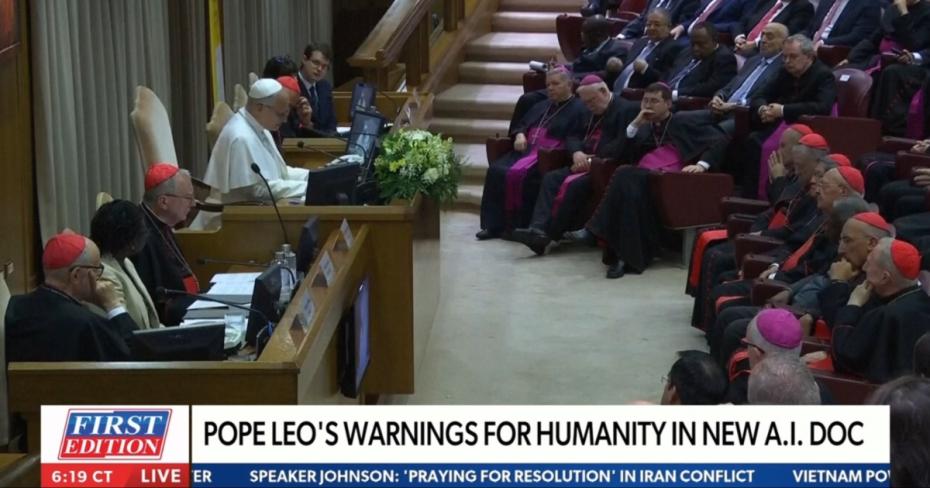
In his encyclical published on Monday, the pope emphasized the role of government and civil society in mitigating the potential dangers of AI. “A more moral AI is not enough if that morality is determined by a few,” wrote Pope Leo. “What is needed is a more active political involvement that is capable of slowing things down when everything is accelerating, and of protecting the opportunities for communities still to be able to participate and ask questions.” [Emphasis added].
The Roman pontiff also appeared to criticize the international AI race between the United States and China with his call to “disarm” AI, warning against efforts to dominate the globe in a “geopolitical” or “commercial” sense. Pope Leo wrote, “Disarming AI means freeing it from the mentality of ‘armed’ competition, which today is not limited simply to the military context, but is also an economic and cognitive phenomenon.” The pope continued, “This entails a race for ever more powerful algorithms and larger datasets, driven by the desire to secure geopolitical or commercial dominance.”
By contrast, President Donald Trump postponed signing an executive order regulating AI on May 21 on the basis that overly regulating AI could slow down progress and harm attempts to stay ahead of China in the AI race. According to Politico, Sacks was a leading voice urging the president not to sign.
MRC Free Speech America VP Dan Schneider backed Sacks’s approach. “We already know what the government asserting control over the tech industry looks like,” Schneider said. “The Biden administration relentlessly used crisis after crisis to flex its power over social media, censoring and debanking Americans. At the same time, Biden and Harris laid the groundwork for an AI landscape made up of two or three tightly controlled companies pushing leftist bias and DEI discrimination. We cannot afford to let the government control AI. Thankfully, the president has assembled a team of pros who know how to do this right.”
The executive order was reportedly sparked by the unveiling of Anthropic’s Claude Mythos, a powerful cybersecurity AI. Mythos reportedly discovered thousands of potential security vulnerabilities across Big Tech, leading Anthropic to delay the release and offer assistance to affected companies through Project Glasswing.
On May 5, Anthropic CEO and co-founder Dario Amodei claimed that the world only had six months to a year before Chinese AI had capabilities similar to those demonstrated by Mythos.