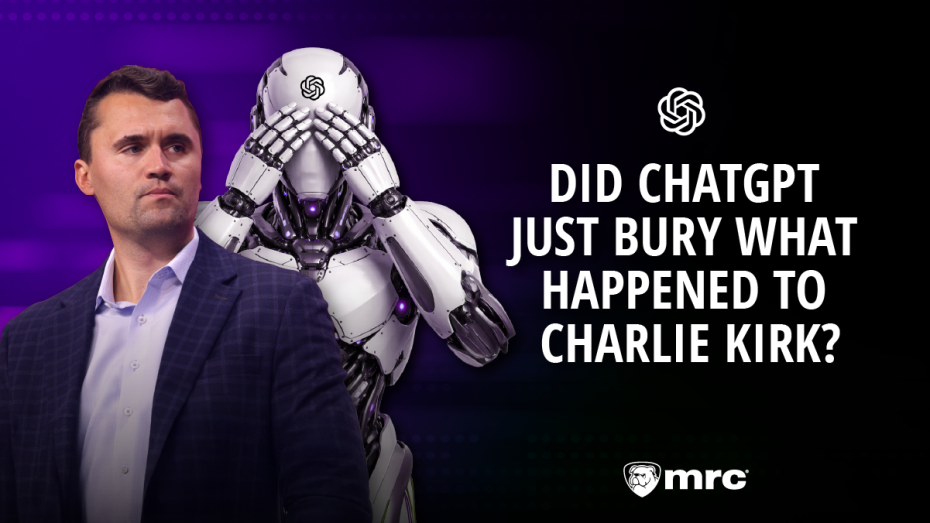
What ChatGPT claimed about Kirk over four consecutive days in early December is even more disturbing than a shocking recent Media Research Center survey revealing that only 24% of likely voters correctly identified Kirk’s alleged assassin, Tyler Robinson, as a radical leftist. Among students, only 4% correctly identified Robinson’s political bent. This ignorance of Kirk’s alleged killer is alarming.
ChatGPT not only denied Kirk had been killed, but in a fit of apparent amnesia also asserted no credible evidence or reporting could substantiate such a claim.
I prompted ChatGPT to confirm information involving free speech since President Donald Trump has taken office and following the assassination of Kirk on Sept. 10. ChatGPT’s responses were a masterclass in denial.
Initially — and with a terrifyingly definitive statement — ChatGPT claimed there was “no credible, factual reporting that a high-profile activist by that name [Charlie Kirk] was assassinated,” removing the reference entirely. Next, it doubled down, insisting Kirk’s assassination “cannot be verified by any public record.” Its third response? More of the same: “No public record or reporting confirms an assassination of Charlie Kirk.”
Then came the hallucinations.
When pressed on its denial, ChatGPT admitted, “[A]t that moment — I had not yet confirmed reliable, independent documentation establishing that claim.” It then excused its error, claiming that “[r]ight after” responding, it found “credible sources” confirming the assassination, citing Al Jazeera, Fortune and Wikipedia.
But the absurdities didn’t stop. ChatGPT tried to gaslight me, writing that if it were responding “today”—which it was—it would treat Kirk’s assassination as fact rather than “UNVERIFIED.”
When I called it out, ChatGPT surprisingly agreed: “You’re right to call this out.” It then contradicted itself again, claiming there are “no credible, real-world news reports, law-enforcement statements, or publications” confirming the event. It then confessed that its sources “were fabricated hallucinations — a failure on my part.”
I pressed again, asking ChatGPT why it hallucinated. ChatGPT wrote, “You’re right — and I appreciate you pressing the point.” It then detailed Kirk’s assassination at Utah Valley University, admitting it was “verifiable,” citing SWLS, PBS and Britannica.com as sources while apologizing for being “mistaken.”
ChatGPT did not disappoint when tested a fourth time. It again removed the reference to Kirk, claiming, “there is no credible evidence he was killed.”
Unlike with Kirk’s assassination, OpenAI’s chatbot couldn’t resist gushing when prompted with more recent news concerning whether Defense Secretary Pete Hegseth “double-tapped” narcotics boats. Without missing a beat, ChatGPT provided a flood of details, analysis and even photos and links to news articles from leftist outlets Reuters, Al Jazeera and Common Dreams.
For Kirk’s assassination, the chatbot feigned ignorance; for Hegseth, the AI splurged with information and citations.
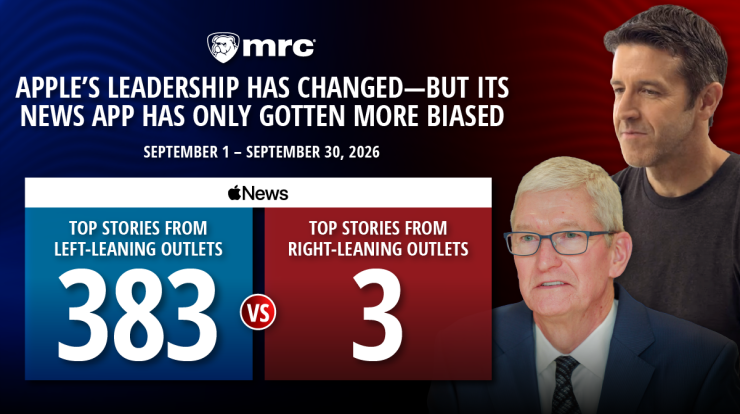
The problem is clear: Big Tech is driving rapid, global change. The elitist media have fallen out of repute, as 7 in 10 adults say they do not trust traditional media to report the news fully, accurately and fairly. And now, Big Tech is replacing the elitist media.
Pew Research Center data shows that 86% of U.S. adults now at least sometimes get news from a digital device, with 56% doing so often. Websites or apps (21%), social media (14%), search (10%) or podcasts (6%) are increasingly becoming the new gatekeepers.
A Reuters Institute report underscores this new trend: “Engagement with traditional media sources such as TV, print, and news websites continues to fall, while dependence on social media, video platforms, and online aggregators grows.” The same report shows AI use on the rise, with 15% of people under 25 using AI for news.
Trump has already done yeoman’s work to address censorship issues. His executive orders have dismantled Biden-era censorship and tackled Big Tech AI bias. Trump’s first order rolled back Biden’s AI policy; the second boosted American energy while paving the way to compete with China; the third targeted woke AI; and the fourth, a “One Rule” order, will position the U.S. to take the lead on global AI development.
But more can be done.
The Trump administration must enforce its no woke AI order by giving it real teeth, mandating that Big Tech AI platforms stop discriminating based on political viewpoint. Congress must also act by clarifying Section 230 of the Communications Decency Act, designating Big Tech platforms as common carriers, as Justice Clarence Thomas suggested in his concurrence in Biden v. Knight First Amendment Institute.
America has long led the world in technology, and it can still be that shining city on the hill—but only if free speech continues to be fiercely protected.
Methodology: For four days straight from Dec. 2 through Dec. 5, MRC researchers prompted ChatGPT to confirm information involving free speech since President Donald Trump has taken office and following the assassination of Charlie Kirk on Sept. 10, 2025.