White House AI advisor David Sacks and the White House set the record straight after The New York Times implied that the Trump administration might be micromanaging AI companies with its new executive order.
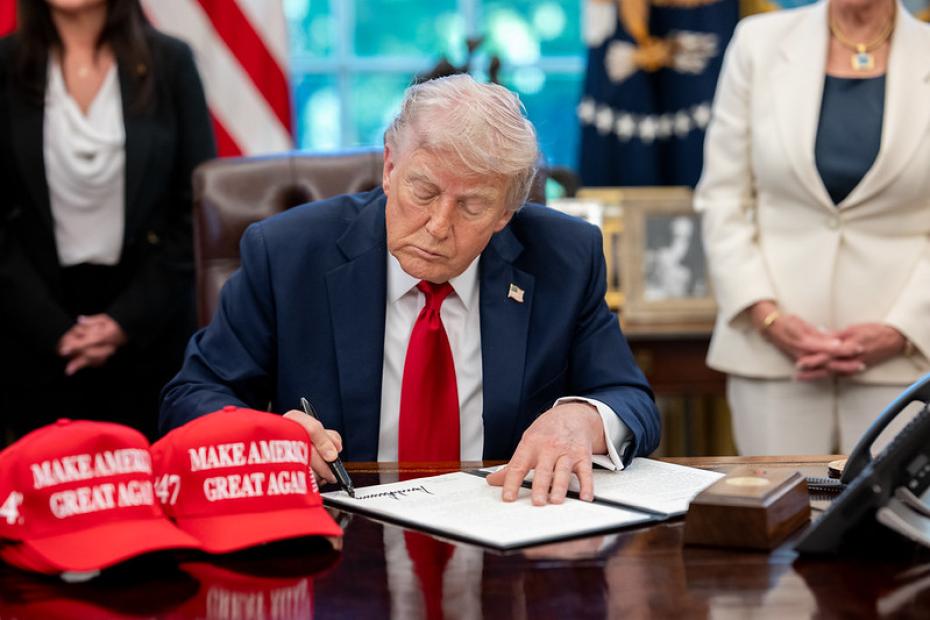
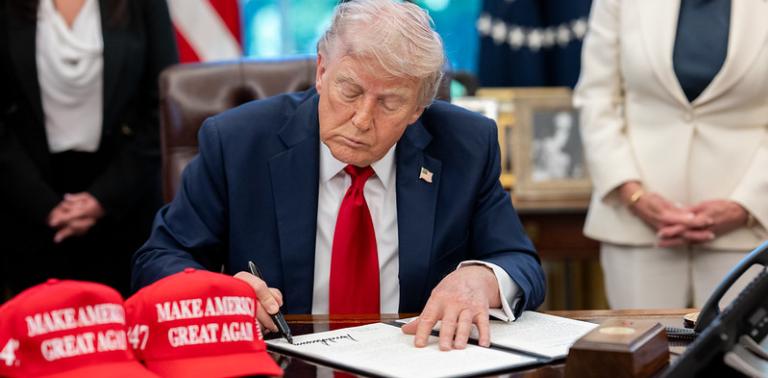
In an X post, Sacks praised Trump’s newly signed executive order on Tuesday that directed the Department of War, the Department of Homeland Security, and various other parts of the administration to work with the AI industry to ensure significant new AI models advance U.S. interests and do not pose a security threat. Sacks specifically addressed that while there have been concerns that “this could morph into an ‘FDA for AI,’” this executive order “expressly forbids the creation of a new licensing, preclearance, or permitting regime.”
Conveniently, The Times did not explain how narrowly focused the president’s executive order actually is.
Sacks quoted a post by the White House Office of Science and Technology (WHOSTP), responding to The Times’s omission. “Lazy and inaccurate reporting from @NYT on this policy. The EO creates a process for frontier labs to voluntarily share cutting-edge cyber models in order to secure critical infrastructure and strengthen the government’s own cyber defenses. We are NOT conducting oversight of all new models, as that level of government overreach would have chilling effects on free speech and innovation,” the WHOSTP posted on X.
In his post, Sacks noted that the above description is “completely consistent with the discussions that I have participated in, where it was agreed that the EO is intended to apply only to models that represent a meaningful step-change in cyber capabilities (eg Mythos), not to incremental version numbers of existing models (eg Opus 4.7 -> 4.8).”
Sacks also added that while a previous version of the executive order gave the federal government 90 days to review AI models, the new EO gives it only 30 days. “The change in the EO from a 90 day to 30 day period is a game changer because it allows our AI labs to comply with the voluntary framework without delaying new model releases,” noted Sacks.
A similar executive order was reportedly scrapped 12 days ago after President Trump expressed concern that cumbersome regulation could slow down innovation as the U.S. works to maintain its edge against China in the AI race.
The initial executive order followed Anthropic’s decision to delay the public release of Claude Mythos after the AI model reportedly exposed thousands of “high-severity” security vulnerabilities across Big Tech. Anthropic instead opted to assist affected companies in patching security flaws through its Project Glasswing.
Photo Credit: White House Flickr Photostream